
July 17, 2026
July 17, 2026
7.00 Min Read
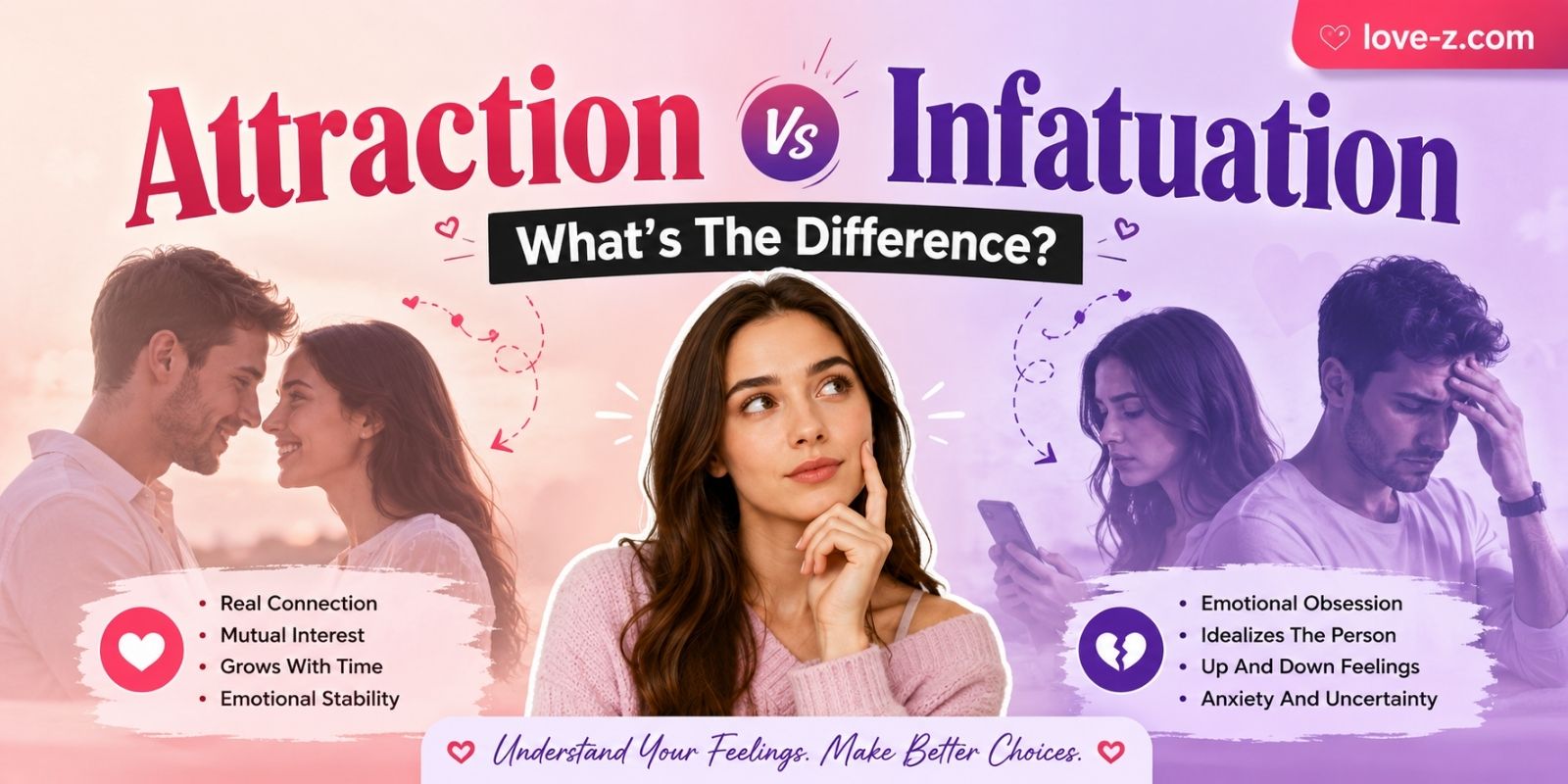
Attraction Vs Infatuation: What’s The Difference?
That dizzy, heart-racing, can’t stop thinking about them feeling hits hard. It takes over your mornings, your lunch breaks, and your 2 a.m. scrolling sessions. Everything about this person seems magnetic. But here’s the tricky part. That electric feeling doesn’t always mean what you think it means. Sometimes it’s the start of something deep and genuine. Other times, it’s your nervous system throwing a party that will end in a crash.
Most of us have been in that exact spot. You meet someone new, and the intensity convinces you this must be something special. The butterflies feel like proof. But attraction and infatuation wear very similar disguises, especially in those early weeks. Telling them apart takes more than just trusting the rush. It takes a bit of honest self-awareness and a willingness to slow down long enough to see what’s underneath all that sparkle.
Table Of Contents For Attraction Vs Infatuation
- ① Why Your Brain Treats Attraction And Infatuation As The Same Thing
- ② The Emotional Patterns That Separate Genuine Pull From Temporary Obsession
- ③ Hidden Habits That Keep You Stuck In The Infatuation Loop
- ④ How To Ground Yourself And Let Authentic Attraction Develop
- ⑤ Knowing When To Trust The Feeling And When To Walk Away
- ⑥ FAQs About Attraction Vs Infatuation
Watch Attraction Vs Infatuation And Spot The Difference

Why Your Brain Treats Attraction And Infatuation As The Same Thing
Your brain doesn’t come with neat labels for every emotion. When you meet someone who sparks interest, the same reward system lights up regardless of how deep the connection goes. Dopamine floods your system. Norepinephrine sharpens your focus. Serotonin drops, making you think about that person on a loop. Researchers like Helen Fisher have mapped this out clearly. The brain chemistry behind romantic attraction and infatuation uses overlapping pathways. So your body physically cannot tell the difference at first. That euphoric rush you feel on a second date? It’s the same cocktail your brain mixes for a fleeting crush on a stranger at the coffee shop.
This is why so many people end up confused after short connections that fizzle. The emotional investment felt enormous, but the foundation was paper-thin. That ache of missing someone you barely dated comes from the same dopamine cycle. Your brain catalogued all the highlights and none of the gaps. It assigned meaning to moments that were still too new to carry any weight.
Infatuation tends to spike fast and hit a ceiling. Attraction, on the other hand, keeps building because it feeds on something more than novelty. It grows from noticing how someone handles conflict, how they treat people around them, and how safe you feel in their presence. The brain eventually needs more than dopamine to sustain interest. It needs oxytocin and vasopressin, the bonding chemicals that only develop through repeated trust and emotional closeness. That shift is where attraction and infatuation finally part ways.
The Emotional Patterns That Separate Genuine Pull From Temporary Obsession
Infatuation can make your emotions depend heavily on another person’s attention. A warm message lifts your mood, while silence suddenly creates doubt. Attraction usually gives you more emotional space. You are interested and excited, but you can still focus on your own day without analysing every interaction.
Your sense of identity can offer another clue. With infatuation, you may adjust your interests or opinions to impress someone. Attraction lets you remain yourself while getting closer to them. Even planning a great first date can feel more relaxed when you are focused on connection instead of trying to perform perfectly.
Hidden Habits That Keep You Stuck In The Infatuation Loop
Infatuation grows when you give the fantasy more attention than the person in front of you. Repeatedly checking social media, replaying messages, and imagining a future can make limited contact feel much deeper. Mood and environment can influence desire too. For example, winter months can intensify sexual attraction and make an exciting connection feel even stronger.
Strong chemistry can also make uncomfortable behaviour easier to excuse. You may overlook inconsistent effort, different values, or poor treatment because losing the connection feels worse. Give yourself enough time to watch how someone behaves across ordinary situations. Their actions will tell you more than the emotional rush.
Look for repeated changes in how you think, choose, and spend your time.
How To Ground Yourself And Let Authentic Attraction Develop
The best thing you can do when emotions run hot is create intentional pauses. Give yourself a few days between dates. Resist the urge to text constantly. Use that space to check in with yourself about what you are feeling and why. Grounding isn’t about playing games or manufacturing distance. It’s about staying connected to your own inner compass while you figure out if this person fits into your life in a meaningful way. Journaling can help. So can talking to a friend who will ask the uncomfortable questions. Even small steps like watching how someone handles common flirting mistakes can reveal a lot about their emotional maturity.
Ask yourself specific questions that infatuation can’t answer. Do you respect this person? Do they make you feel safe enough to be vulnerable? Can you picture navigating a boring Tuesday with them, not just a candlelit dinner? Attraction that’s going somewhere can survive mundane moments. Infatuation crumbles when the spotlight turns off. These reality checks aren’t romantic. But they protect your heart from investing in something that was only ever a mirage.
My boyfriend and I had a stretch early on where we spent an entire weekend doing absolutely nothing glamorous. Grocery shopping. Folding laundry. Watching a documentary neither of us loved. And I still felt drawn to him. That quiet weekend told me more about what I was feeling than any butterflies ever could. If the excitement only lives inside dramatic moments, that’s infatuation. If it survives the ordinary, attraction has taken root, and it’s worth paying attention to.
Knowing When To Trust The Feeling And When To Walk Away
Not every intense feeling deserves your follow-through. Sometimes the smartest thing you can do is recognize that what you are feeling is a spike, not a signal. If your emotions for someone swing wildly based on their availability, or if you feel more in love with the idea of them than the person standing in front of you, that’s a pattern worth questioning. Trusting a feeling works best when that feeling has been tested by time, honesty, and a few imperfect moments together.
There are clear signs that attraction is the driving force. You feel emotionally steady around them. You admire who they are, not just how they make you feel. You are able to have difficult conversations without the fear that the whole thing will collapse. These aren’t flashy signs. They won’t give you butterflies. But they point to something built on mutual respect and genuine interest, which is exactly what keeps a connection alive past the honeymoon stage.
Walking away from infatuation can feel like a breakup even when nothing official existed. That pain is valid. It just doesn’t mean you lost something real. It means your brain got attached to a story it wrote without enough chapters. Give yourself permission to grieve the fantasy without letting it convince you to chase it further. The right connection won’t need you to guess, decode, or perform. It will feel like something you can breathe inside of, instead of something that takes your breath away every five minutes.
Turn Attraction Into A More Playful Experience
Attraction can begin with chemistry, confidence, and the signals people exchange when getting closer. The Magnet For Women Pheromone Attraction Aid offers a playful addition for women who want to experiment with scent as part of their dating routine while discovering where genuine attraction leads.
FAQs About Attraction And Infatuation
Can attraction turn into infatuation?
Attraction can become infatuation when attention grows intense, and imagination starts filling gaps in what you know about the person.
How can I tell if I like someone or the idea of them?
List what you know from direct experience. If most appealing qualities come from assumptions or imagined possibilities, fantasy may be carrying much of the feeling.
Why do I think about someone constantly after only a few dates?
Novelty, uncertainty, chemistry, and anticipation can keep someone highly noticeable in your thoughts even after limited time together.
Does infatuation mean a relationship will fail?
Infatuation doesn’t predict the outcome. Give the connection time and compare early excitement with communication, compatibility, consistency, and mutual effort.
How can I slow down when my feelings are getting intense?
Keep your routines, reduce constant checking, notice facts instead of assumptions, and allow the person’s behaviour to reveal more over time.